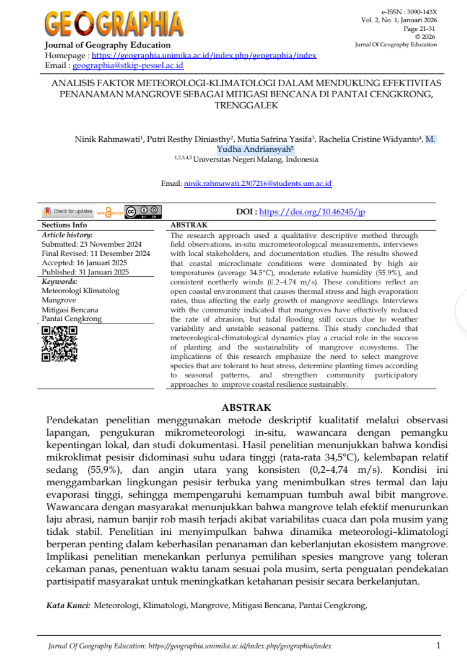
The research approach used a qualitative descriptive method through field observations, in-situ micrometeorological measurements, interviews with local stakeholders, and documentation studies. The results showed that coastal microclimate conditions were dominated by high air temperatures (average 34.5°C), moderate relative humidity (55.9%), and consistent northerly winds (0.2–4.74 m/s). These conditions reflect an open coastal environment that causes thermal stress and high evaporation rates, thus affecting the early growth of mangrove seedlings. Interviews with the community indicated that mangroves have effectively reduced the rate of abrasion, but tidal flooding still occurs due to weather variability and unstable seasonal patterns. This study concluded that meteorological-climatological dynamics play a crucial role in the success of planting and the sustainability of mangrove ecosystems. The implications of this research emphasize the need to select mangrove species that are tolerant to heat stress, determine planting times according to seasonal patterns, and strengthen community participatory approaches to improve coastal resilience sustainably.
-
ANALISIS FAKTOR METEOROLOGI-KLIMATOLOGI DALAM MENDUKUNG EFEKTIVITAS PENANAMAN MANGROVE SEBAGAI MITIGASI BENCANA DI PANTAI CENGKRONG, TRENGGALEK
Ninik Rahmawati, Putri Resthy Diniasthy, Mutia Safrina Yasifa, Rachelia Cristine Widyanto, M. Yudha Andriansyah
Penerbit :
Universitas Negeri Malang (GEOGRAPHIA)
Tahun :
2026

Jurnal
Meteorologi Klimatologi Mangrove Mitigasi Bencana
-
No Scan-
-
No Klasifikasihttps://doi.org/10.46245/jp
-
ISBN-
-
ISSN-
-
No Registrasi-
-
Lokasi TerbitUniversitas Negeri Malang
-
Jumlah Hal11
-
Label-
-
Versi DigitalTIDAK
-
Versi FisikTIDAK
-
Lokasi Rak Buku Fisik//
-
Jumlah Exemplar Fisik Tersedia-