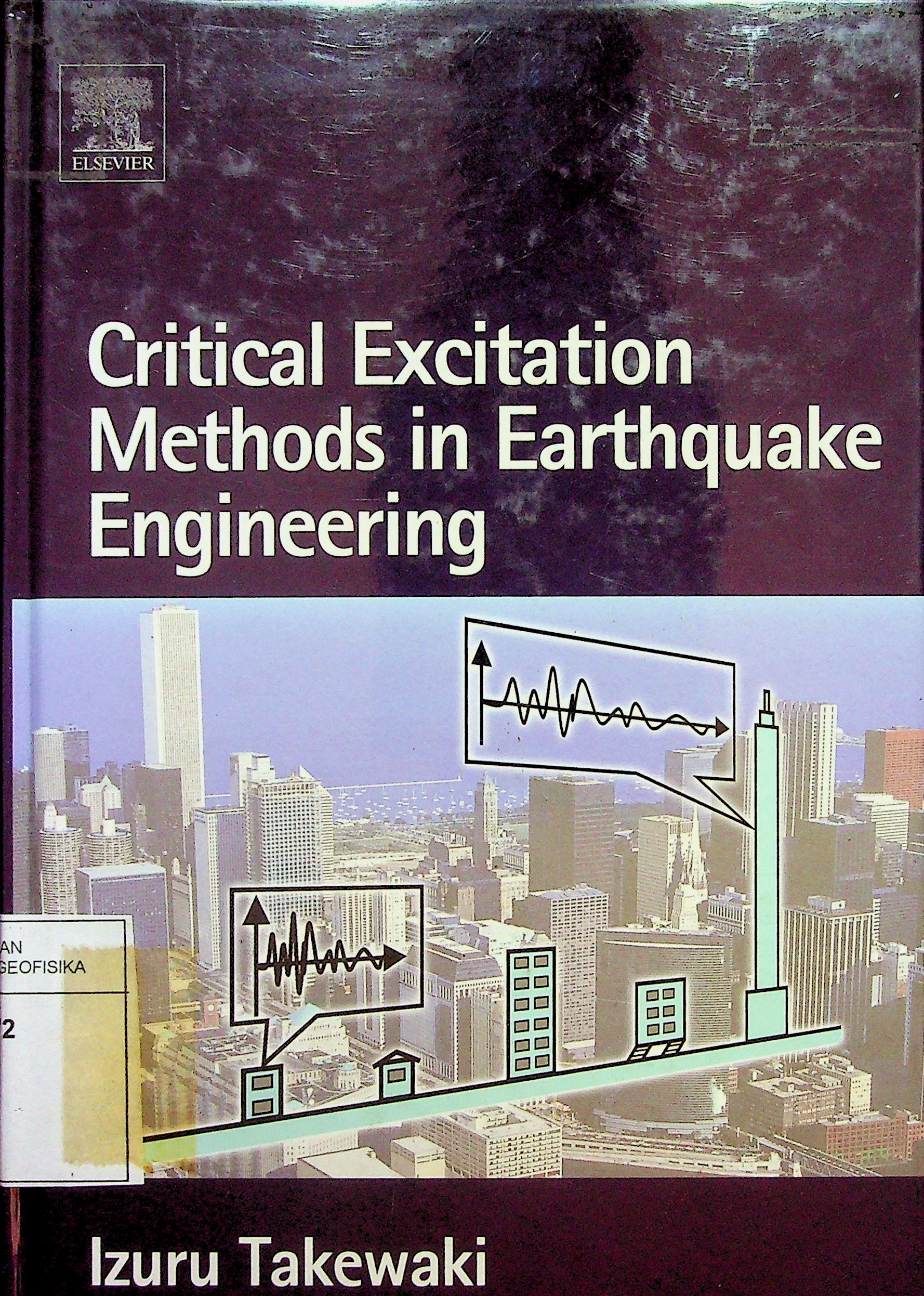
This book develops the concept of critical excitation as a framework for identifying the most unfavorable earthquake ground motions for buildings and structural systems. It argues that conventional seismic design based only on past earthquake records and subsequent code revisions cannot fully address uncertainty in earthquake occurrence, rupture processes, wave propagation, and site conditions, especially for important or high-risk structures. The book discusses probabilistic and energy-based critical excitation methods, stationary and non-stationary random inputs, non-proportionally damped structural systems, acceleration response, MDOF systems, critical envelope functions, robust stiffness design, earthquake energy input, soil-structure interaction, base-isolated buildings, and earthquake input energy rate. It is intended for earthquake engineers, structural designers, and researchers concerned with rational design ground motions, resonance, structural robustness, and performance-based seismic design.
-
Critical Excitation Methods in Earthquake Engineering
Izuru Takewaki
Penerbit :
Elsevier Inc.
Tahun :
2007

Buku Text
-
No Scan916
-
No Klasifikasi624.1762 Tak c
-
ISBN978-0-08-045309-5
-
ISSN006A/I/2008
-
No Registrasi006A/I/2008
-
Lokasi Terbit-
-
Jumlah Hal270
-
Label006A/I/2008
-
Versi DigitalTIDAK
-
Versi FisikTIDAK
-
Lokasi Rak Buku Fisik//
-
Jumlah Exemplar Fisik Tersedia-